
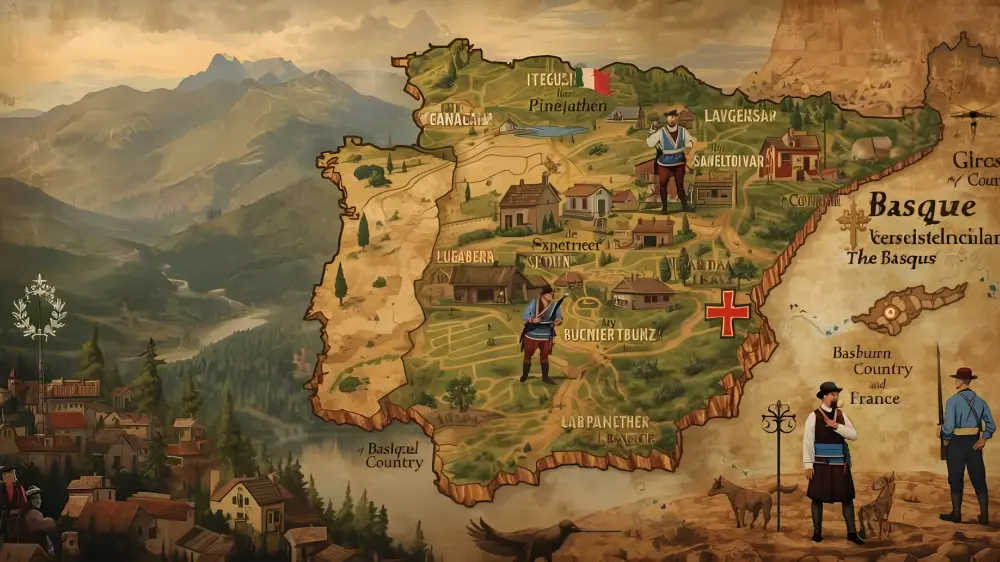
Art movements often reveal more about a region than history books do. They demonstrate the way individuals think, what they defend and how they re-imagine their past. That type of cultural development is precisely what is depicted in the narration about basqueserpartists. It unites the mythology of the ancient Basques, the symbolism of the serpent, and the contemporary experimentation of artwork into a single creative self.
The movement is at the cross point of tradition and innovation. It honors the memory of the ancestors and adopts modern media. A lot of individuals are exposed to basqueserpartists by looking at visual art, but its basis reaches far into language, folklore and local pride. To know better this movement it is necessary to find out its origin, its symbolism, philosophy and its impact nowadays.
Basqueserpartists: Meaning and Cultural Definition
Basqueserpartists is a term that is made up of three conceptual components. It links the Basques, the symbolism of a serpent and the performance artistic activity into one cultural expression. Such a definition captures the artists recreating Basque mythology in various forms including painting, sculpture, digital installations, and performance art.
Basqueserpartistas is a concept that is founded on identity and not ideology. It is not a political campaign. Rather, it is a cultural trend of narration and preservation of traditions. The serpent artwork employed by artists in this space is often symbolic in connecting the ancient belief systems with the modern arts.
Historical Origins of Basqueserpartists in the Basque Region
Basque country is located in between southwestern France and northern Spain. It is the home to one of the oldest and most unique cultures in Europe. The Basque language, Euskora is older than Indo-European language families, and this makes it linguistically unique. This language separation contributed to the continuation of traditions through the centuries.
In the 20 th century, especially during the reign of Francisco Franco, the Basque language and cultural expression was suppressed. Creativity was transformed into an art form of resistance which was silent yet strong. Due to this, numerous producers resorted to mythological symbolism to maintain identity. This historical basis gave birth to basque serpartists as a distinguishable movement in the late twentieth century.
The cultural environment shaping basqueserpartists includes several core elements:
| Cultural Element | Significance in Movement |
| Euskara language | Reinforces authenticity and heritage |
| Rural traditions | Connect art with land and nature |
| Oral mythology | Inspires symbolic storytelling |
| Festivals and dances | Influence visual and performance styles |
These factors created an artistic climate where mythology naturally merged with modern expression.
Basqueserpartists and Serpent Symbolism in Mythology

The philosophical essence of basqueserpartists is that of serpent symbolism. Serpents are a symbol of danger in most cultures. However, in Basque mythology serpents are used to symbolize wisdom, change and protection. This optimistic understanding forms a creative orientation of the movement.
| Mythological Figure | Symbolic Meaning | Artistic Reflection |
| Sugaar | Transformation and energy | Fluid dynamic compositions |
| Mari | Earth and balance | Nature-centered imagery |
| Herensuge | Guardianship | Layered serpent structures |
| Basajaun | Forest spirit | Organic textures |
Sugaar, a serpent deity associated with storms and transformation, appears frequently in traditional narratives. This is balanced by Mari, the goddess of earth that represents balance and harmony with nature. Another significant character is Herensuge who is represented as a multi-headed serpent protector instead of a destroyer. These mythological roots affect contemporary visual understandings in basque serpartists.
Basqueserpartists Artistic Evolution in Modern Times
The artistic growth of basqueserpartists rose at the end of the twentieth century with the cultural resurgence movements. Artists started to experiment with modern techniques and come back to traditional symbols. It became such a characteristic of this fusion of historical imagery and modern technology.
It is currently spread in painting, sculpture, digital art, performance and installation projects. Stone and wood are natural materials that are used with LED lighting and projection mapping. This opposition is an analogy of the unity between the old and the new. Serpentine curves, fragmented compositions and Euskora typography are commonplace in the visual language.
In addition, online social media increased the reach of the movement. The Basque symbolic art has been exposed to the world through online displays and sharing of social media. Therefore, Basqueserpartists are up to date and flexible in contemporary creative areas.
Cultural Identity Versus Political Misconceptions
There is a typical misconception that has been brought about by the similarity between basqueserpartists and Basque separatism. Nevertheless, these are two totally different concepts in terms of intent and action. Basque separatism denotes political activism of seeking regional independence, whereas basque serpartists only engage in cultural and artistic expression.
The following comparison clarifies this distinction:
| Aspect | Basqueserpartists | Basque Separatism |
| Nature | Cultural art movement | Political activism |
| Core Focus | Mythology and identity | Autonomy and independence |
| Expression | Visual and performance arts | Political action |
| Global Reach | Artistic exhibitions | Political discourse |
However, the movement does not focus on political activism but individual artists might have personal political opinions. Its main agenda is heritage-based artistic storytelling.
Global Recognition and Basqueserpartists Influence
Basque art came into greater international attention with the establishment of the Guggenheim Museum Bilbao in 1997. The museum made Bilbao a significant cultural destination and increased the worldwide attention to Basque contemporary creativity. This indirectly reinforced the knowledge about basqueserpartists.
Several factors explain the rising global relevance of basque serpartists:
- Renewed interest in regional identities
- Visual appeal of mythological symbolism
- Expansion of digital art platforms
- Academic focus on cultural preservation
Cultural tourism in the Basque region has expanded steadily since then. Academic research into indigenous art traditions has further supported scholarly attention. Digital media continues to increase visibility through online galleries and cross-border collaborations. The serpent’s universal association with renewal allows audiences worldwide to relate to the movement’s themes.
Key Philosophical Themes in Basqueserpartists
Beyond visual aesthetics, basqueserpartists carry deeper philosophical ideas that shape their artistic direction. These themes emphasize balance, continuity, and adaptation.
Core philosophical foundations include:
- Cultural memory as a living force rather than static tradition
- Fluid identity that evolves over time
- Harmony between humans and nature
- Artistic resistance through beauty instead of conflict
These themes ensure that basque serpartists remain relevant across generations while maintaining a strong connection to heritage.
Why Basqueserpartists Continue to Grow?
The globalized world tends to pressure towards homogenization, but movements such as basqueserpartists prove to be examples that show how strong preservation of cultural identity can be. The movement offers people authenticity and meaningful narration, which they desire more and more.
Interest in search has been increasing as people discover regional art movements and symbolic traditions. The serpent is universally linked to renewal and wisdom, which makes basque serpartists reach the audience outside the Basque region.
Conclusion: Cultural Continuity Through Basqueserpartists
Basqueserpartists show how art can retain identity and at the same time implement innovation. The movement fills the gap between mythology and contemporary design. It is a symbol of strength as a result of cultural past. Concurrently, it blends with modern artistic environments with a lot of confidence.
Basque serpartists remake old stories through the symbolism of serpents and Basque tradition to make them relevant today. Their further development proves that culture is expressed in the most successful way when culture and innovation are kept in conversation.
Read More Blogs :- Chase Muñiz: Identity, Cultural Roots, and Digital Rise










Leave a Reply